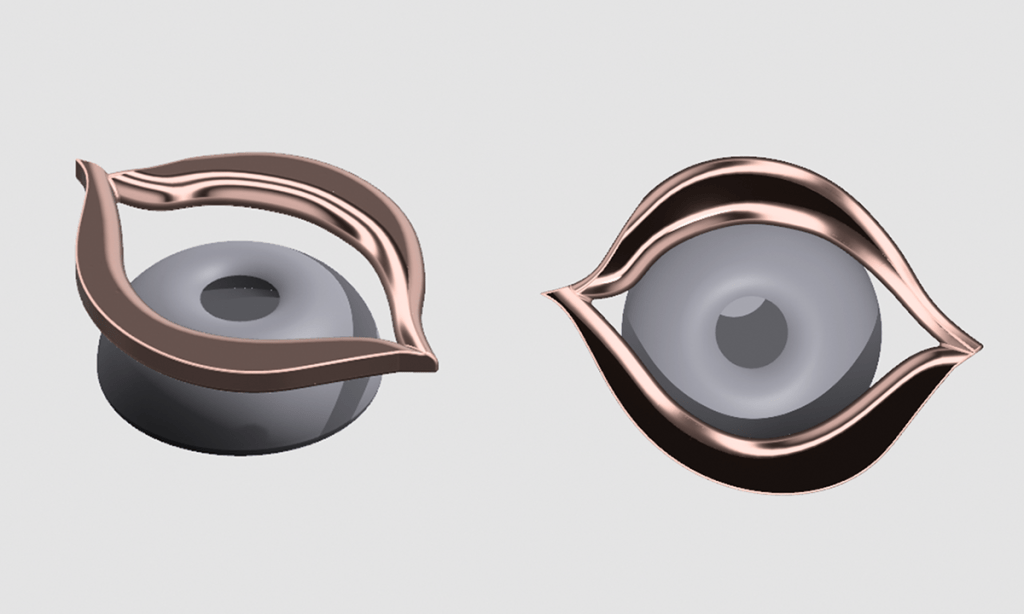
The dominant approach to assistive technology follows the medical model of disability: devices engineered to blend in, to minimise visibility, to help disabled people pass as non-disabled. This design philosophy removes autonomy by assuming invisibility is always preferable. SEEN starts from a different premise: that disabled individuals should have the same freedom of self-expression as anyone else, including the freedom to decide how visible their disability and their assistive technology are.
Hardware Design: Wearing It Your Way
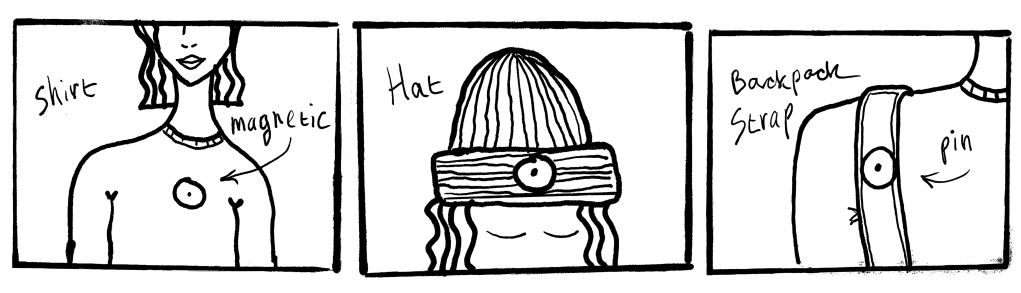
The first design decision was the form factor. Rather than smart glasses, which are bulky, socially conspicuous, and abandoned by roughly 30% of users within a year, SEEN is a wearable pin camera. The pin format offers something no glasses-based device can: placement flexibility. It can be worn on a shirt, clipped to a hat, or attached to a backpack strap. The device moves with the user’s style and context, not the other way around.
Hardware Design: Beyond Invisibility
Should assistive devices prioritise invisibility? Should the goal be independence or interdependence?
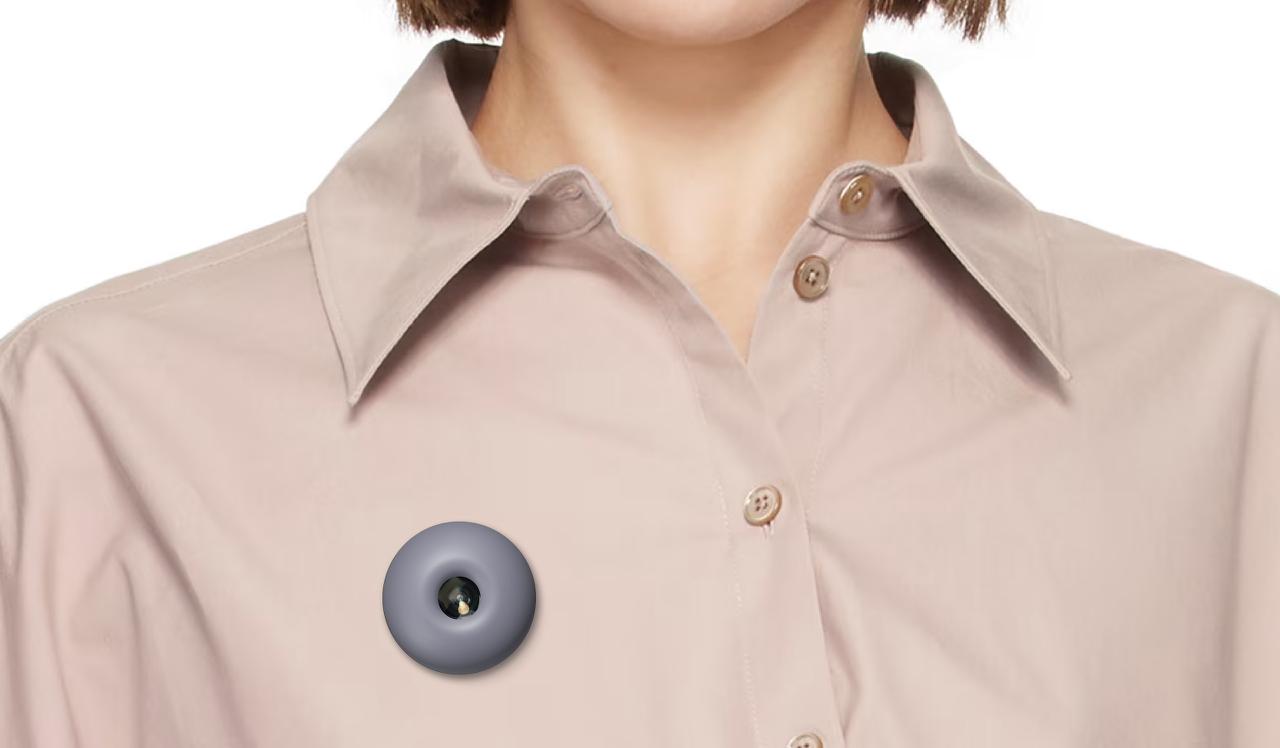
These questions shaped the second hardware innovation: a magnetic add-on system that gives the wearer complete control over how their device presents to the world. Without the add-on, the camera is a clean minimal dome — discreet, unobtrusive, invisible if that’s what the user wants.
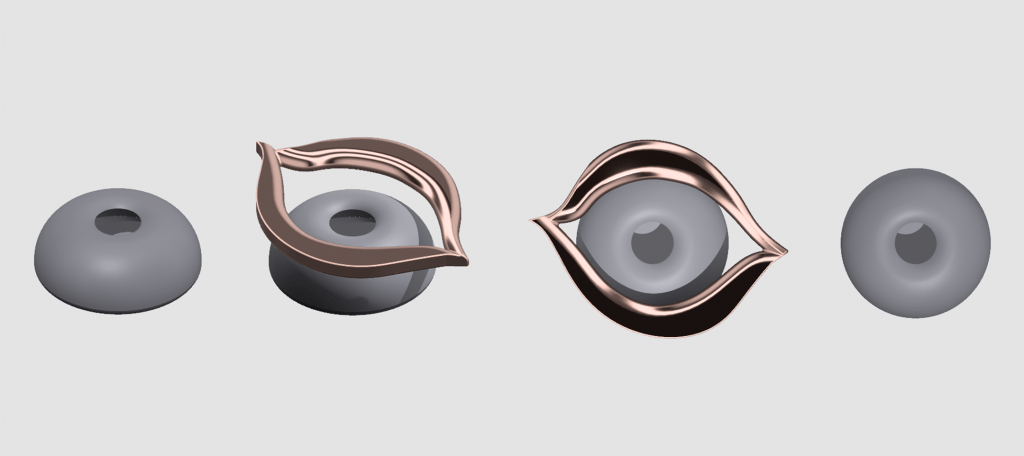
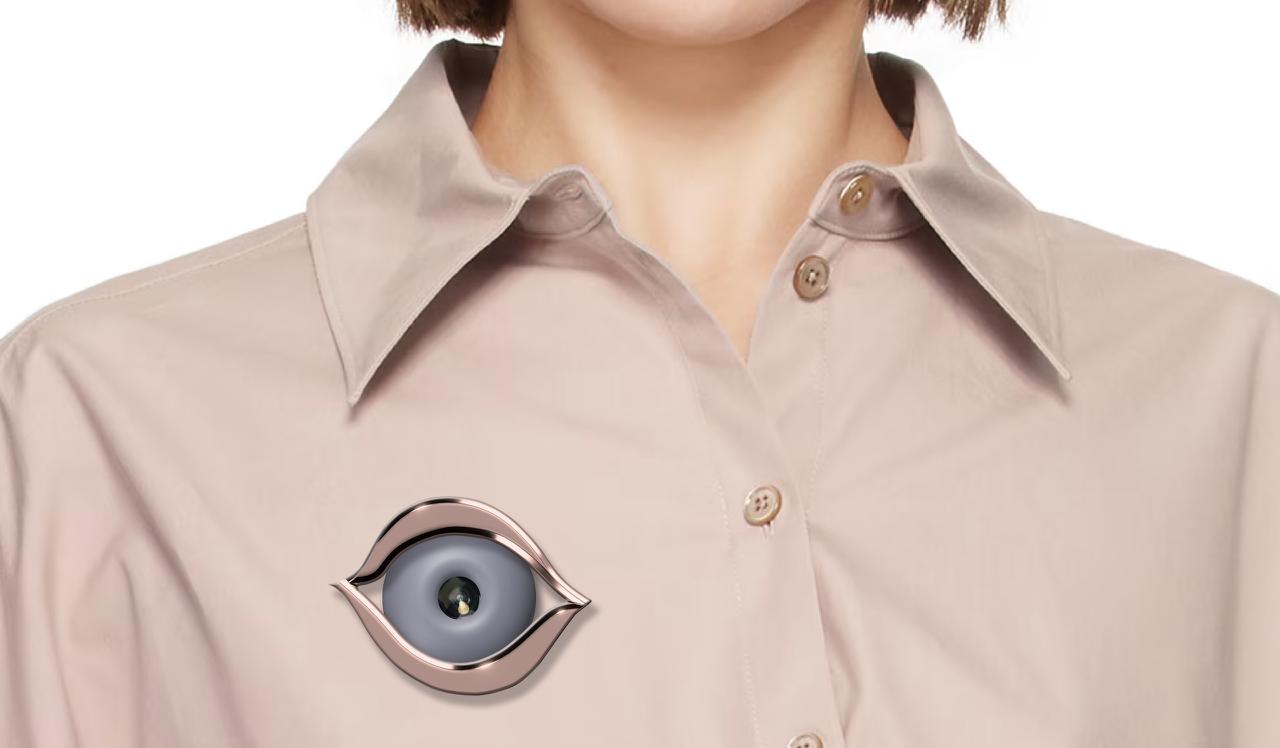
With the add-on, it becomes something else entirely: a sculptural eye-shaped element inspired by a Salvador Dalí jewellery brooch, transforming the device into a statement piece.

For someone who prefers discretion, it disappears. For someone who is loud and proud about their disability and identity, it becomes jewellery. The choice belongs entirely to the wearer.
Software: System Architecture
SEEN operates in 3 integrated phases designed to address both the functional and social barriers of workplace inclusion.
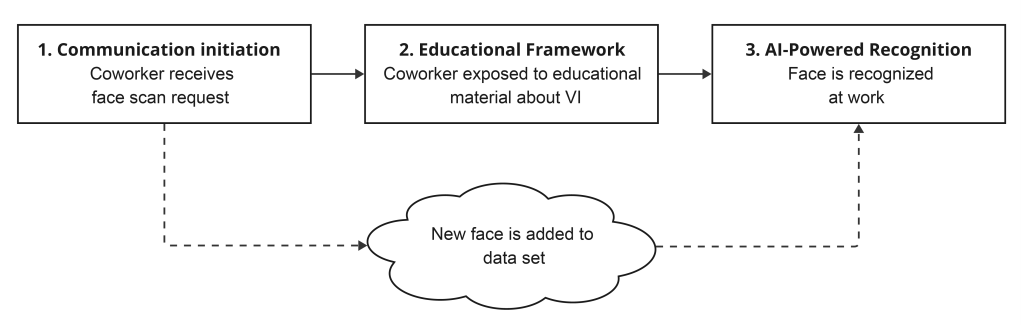
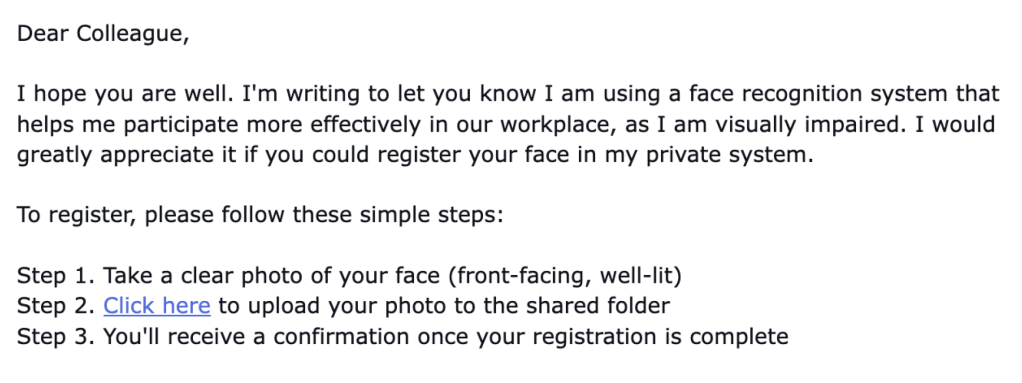
(1)The visually impaired user begins by sending colleagues a face-scan request. A thoughtfully designed email that introduces the technology, explains the visual impairment, and invites participation.
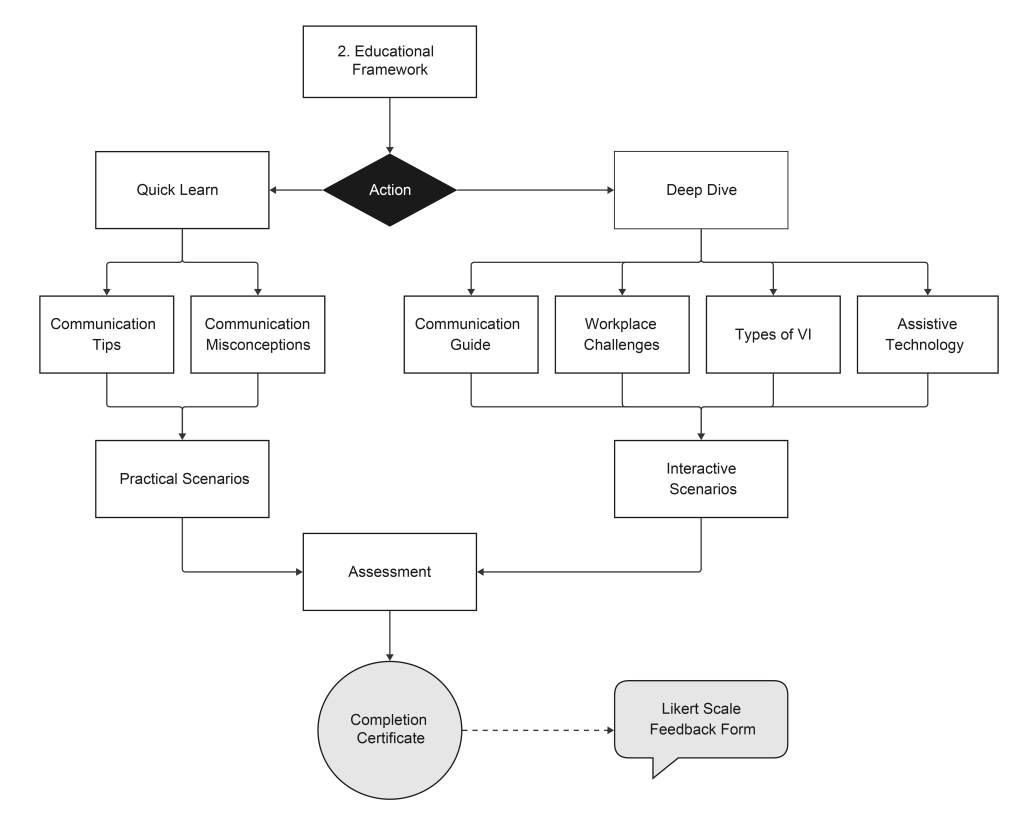
(2) Crucially, the email includes an educational framework: before registering their faces, colleagues engage with learning materials on visual impairment in the workplace. The act of registering becomes an act of inclusion.
(3) Once a colleague’s face is added to the user’s private, locally stored dataset, the system is active. Privacy was a core design constraint — by building personal datasets within specific workplace contexts rather than drawing on public databases, SEEN avoids the inherited biases that make many facial recognition systems discriminatory.
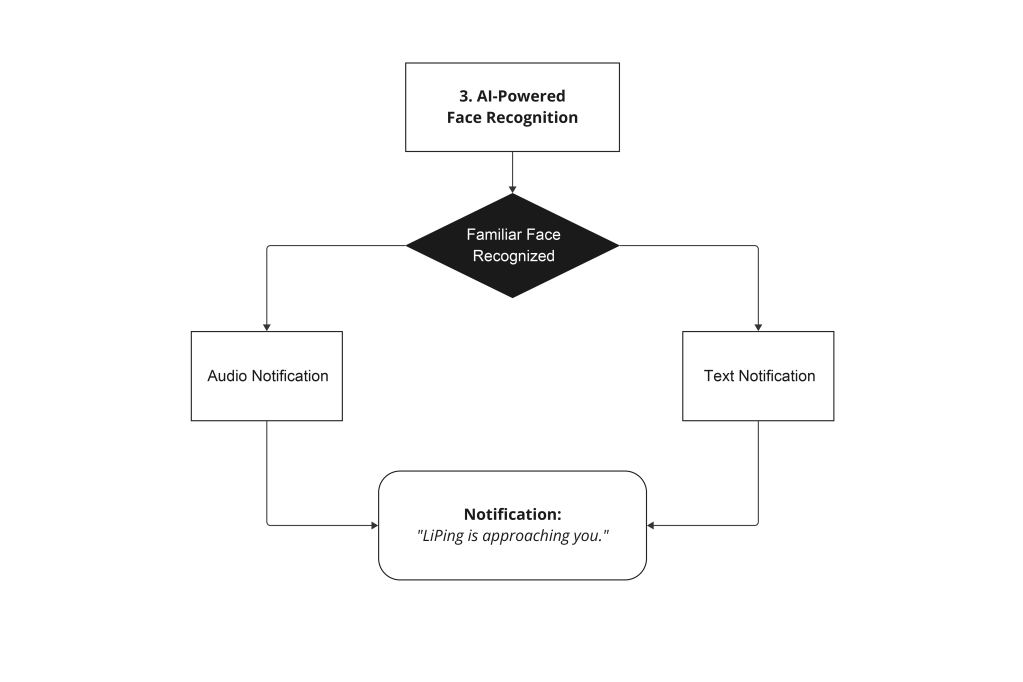
Software: Face Recognition
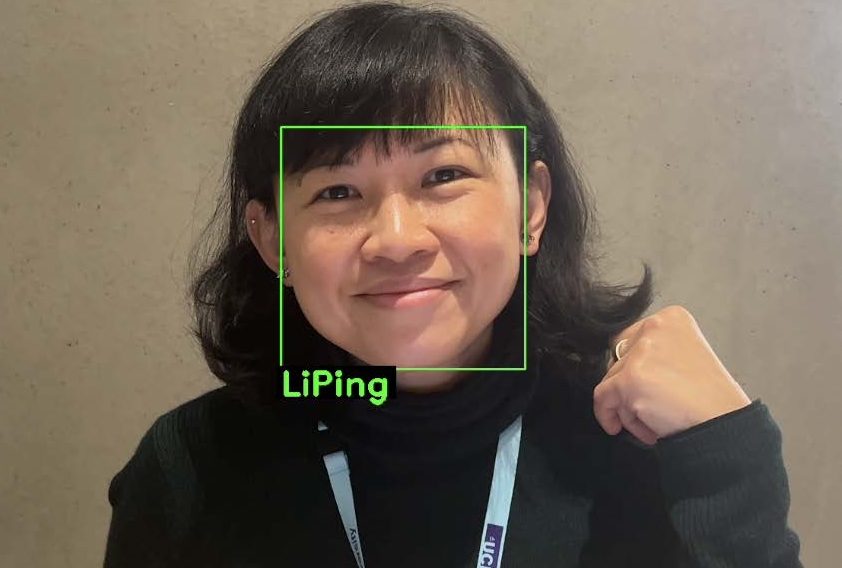
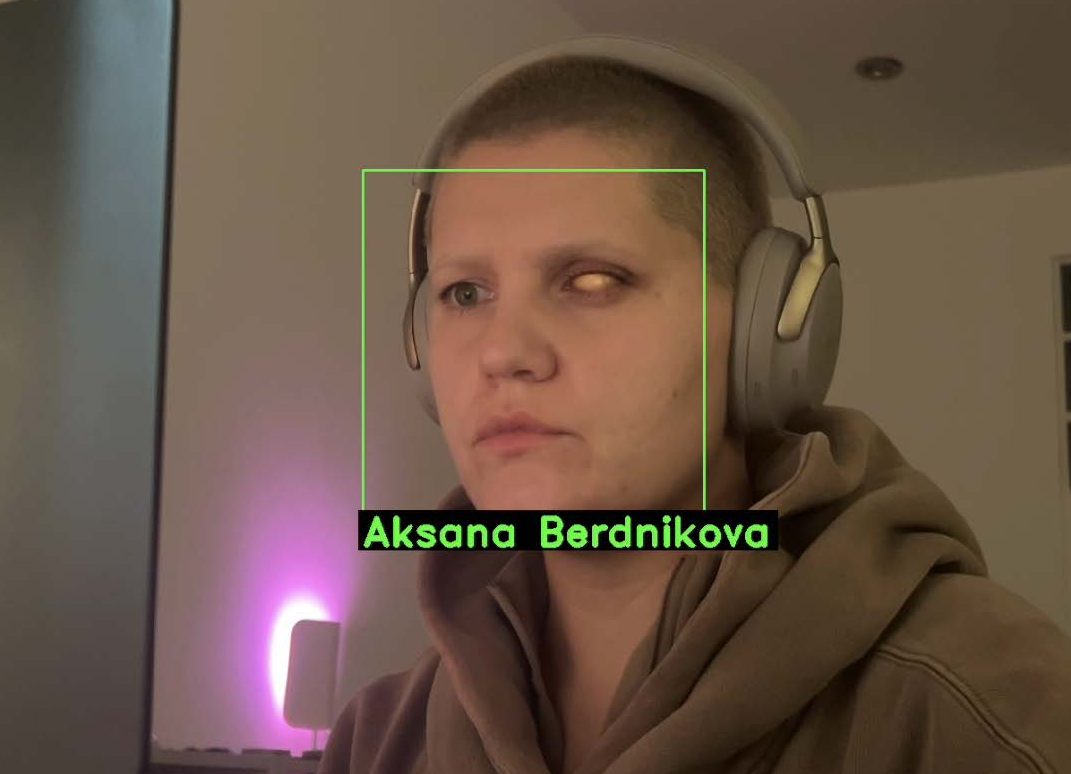
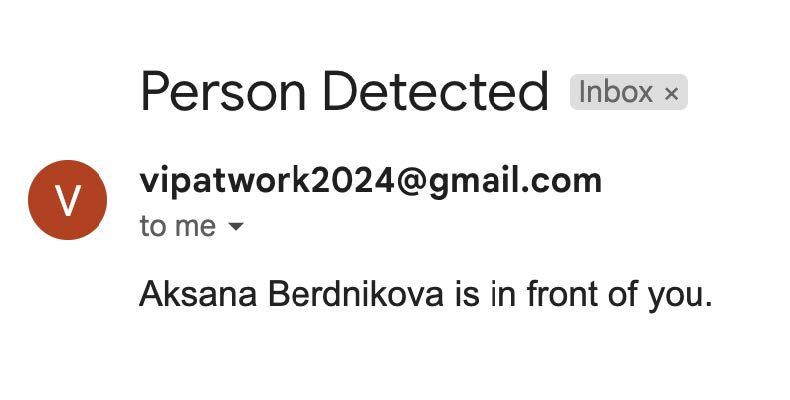
When the wearable camera detects a familiar face using lightweight AI facial recognition, it notifies the user in real time via their preferred channel: audio, text, or email.

As a visually impaired designer, I brought lived experience to every decision in this system: from the privacy architecture, to the educational framework, to the choice to treat the device as a jewellery object rather than a medical appliance.
CREDITS
University: UCL (2025)
Professor: Youngjun Cho
My role: Research, concept development, system design, hardware design, 3D printing, AI implementation, Python coding (with AI assistance)
 Creative Director | Inclusive Approach & Accessible & Design